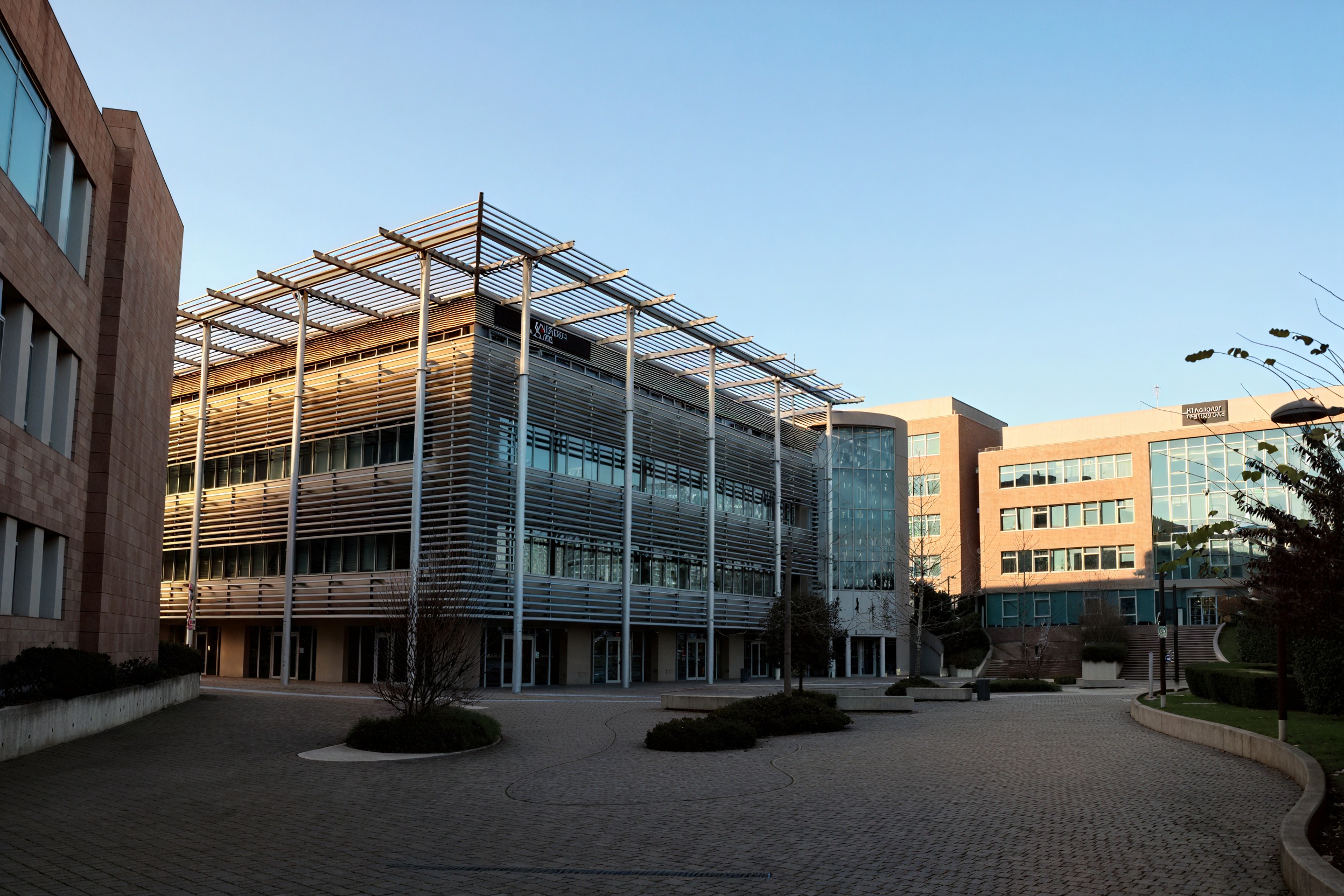
“The Managing Partner of Scorpio Ltd. asked me to go verify the scope of work and budget for an existing facility they had bought in Milan. It was an abandoned IBM light-industrial site from the early 1960s, two metro stops from the center of Milan in an area called Piazza Udine.”
“After reviewing the design and budget prepared by a local design and project-management team, I thought — while this was a fine development scheme, there was an opportunity to do more, push the project to the next level. Rather than simply renovate, we could turn the existing buildings into Class A offices and create two new ones to form a campus in a well-located area with demand. The metro stop on the corner was the key. After returning, I went to the Managing Partner, who I knew well, and said, "You can probably do fine, but I think I can do better. Give me a month to show you." To which he agreed.”
“The general contractor provided a team of young architects to do the best shop drawings I've ever worked on. I met with them once a month during the week I visited and spent 2–3 days reviewing large-scale detailed sections, elevations and axonometric drawings spread across the length of a conference table — gorgeous stuff. Working in Italy on these drawings gave me the feeling of being in an old-school master drawing guild.”
“After getting the green light, I went back twice over six weeks. In between, I broke down the existing renovation budget, met with the architects and project manager in extensive meetings, and designed a new scheme laying out the five buildings around a central piazza, elevating the two new ones in relationship to the topography. I created a new budget and proforma, which I had the local team verify. After working through their resistance — they'd vested themselves in the existing project they'd created — we agreed to move ahead with the new scheme.”
“The facility was fully leased within one year of completion. It was sold three (verify) years later for a considerable profit.”
The locals resisted. He went back twice more and broke it down anyway.
First the gut rehab of the three existing ex-IBM buildings — then the finished campus, the new buildings and the piazza in between.
A tired Class-B industrial site became an institutional-grade office campus — and it lets to multinationals today.
From a knee-jerk response to simply renovate without any vision, to a new set of beautiful buildings that created well-lit, comfortable, needed office space in an area primed for it.