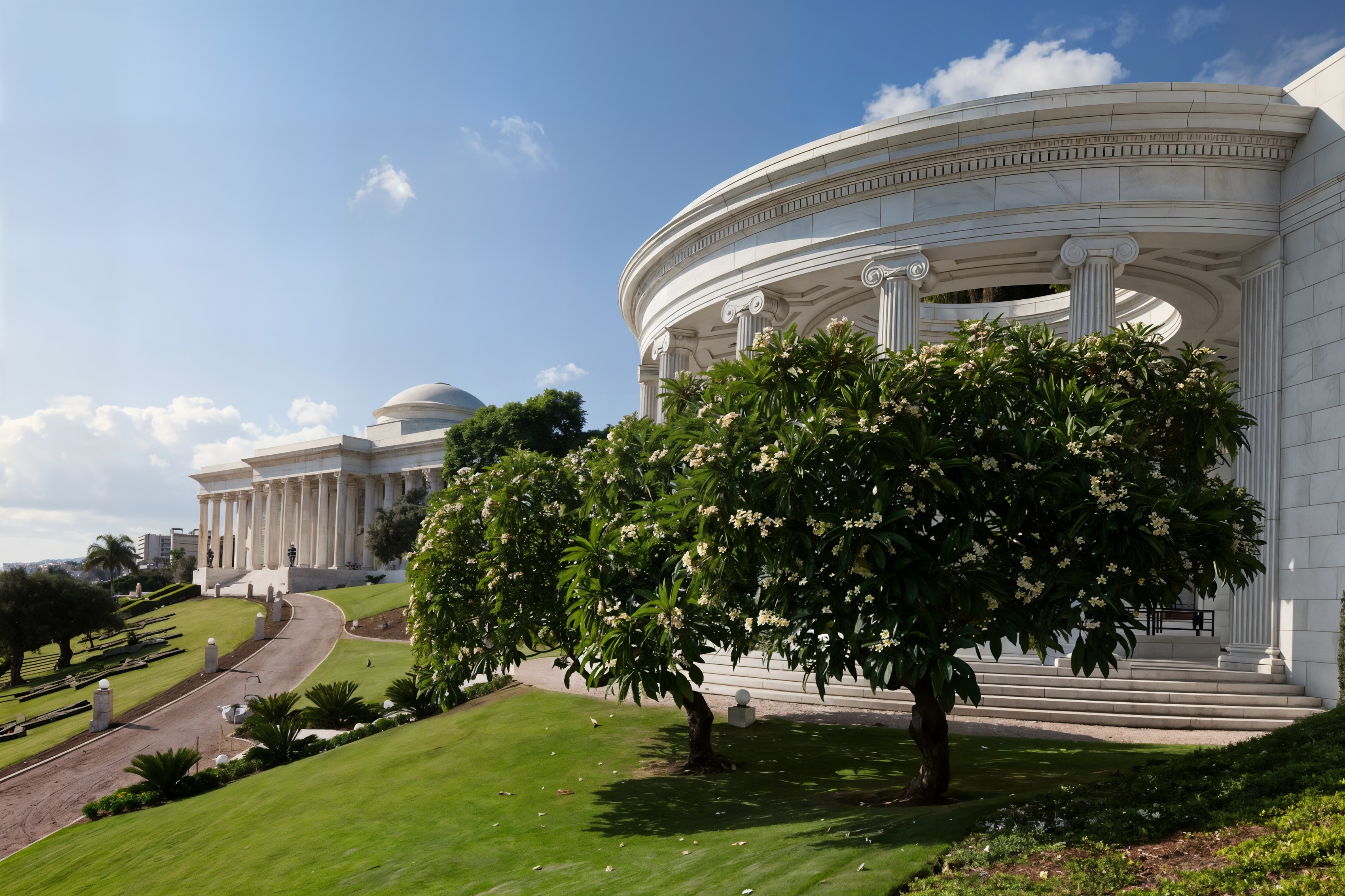
“The Bahá'í World Centre is the spiritual and administrative heart of the Bahá'í Faith, set on the northern slope of Mount Carmel above Haifa, with related sites at Acre in the Western Galilee. Following Israel's independence, David Ben-Gurion, Israel's first Prime Minister, granted the Bahá'í Holy Places in Haifa and Acre — including the land, legal status, permanent tax exemptions — and established a department for the Bahá'í within the Ministry of Religious Affairs.”
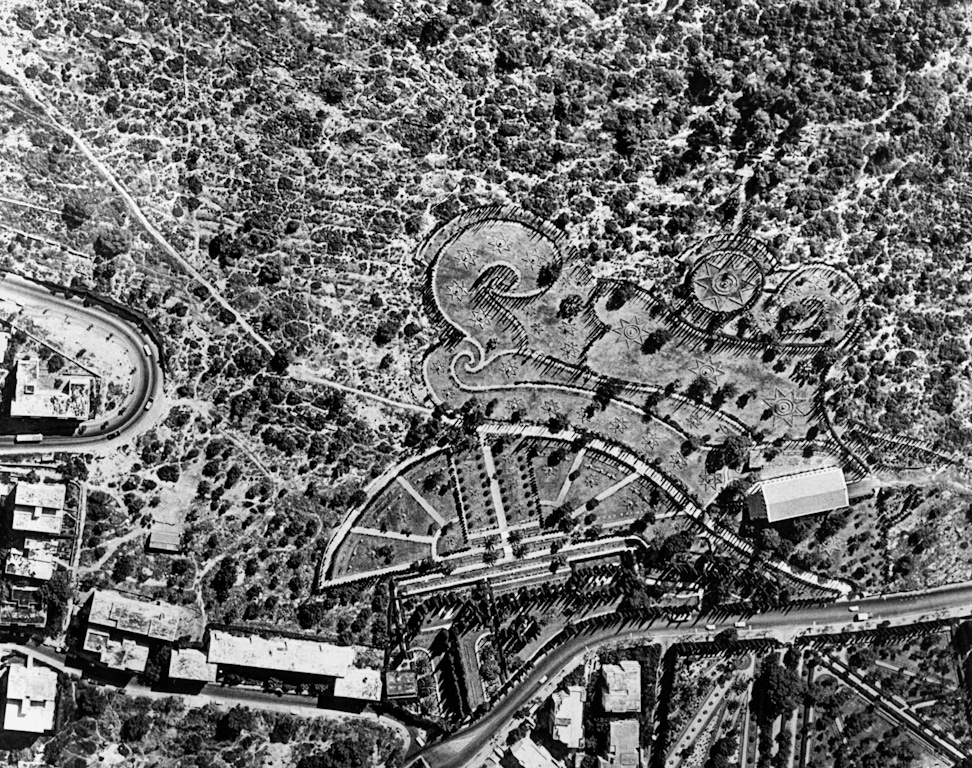
The buildings at the Bahá'í World Centre were designed by Amanat Architects, Vancouver, British Columbia. Although the drawings were done in the metric system, which I had to learn, adapting the details and construction methodologies for an international contingent of contractors, including the Israelis, to execute required a demanding amount of design development and adaptation — which I was tasked with. Once those elements were decided, I managed all architectural forces on site for the execution of a once-in-a-lifetime master construction.
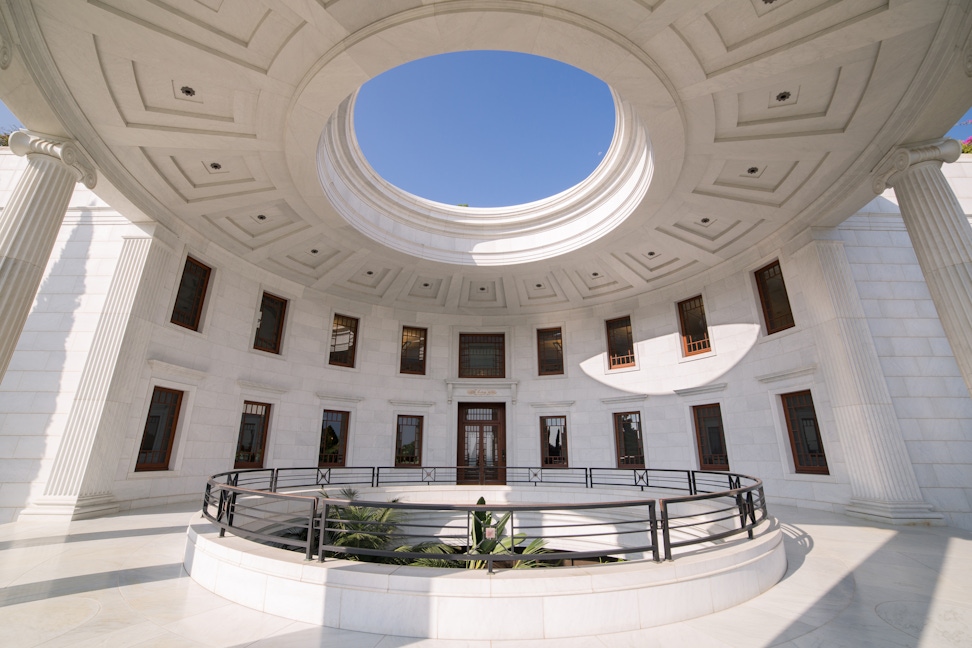
“They were looking for a site architect — someone who could take the drawings of the Bahá'í, done in Vancouver, Canada, and interpret them into the standards, details and execution documents that could be built in Israel. There were three of us on site through construction; I was responsible for the exterior envelope and all of the interior — the marble, the teak windows and doors, the granite and marble floors, and the drywall framing, which was extraordinary because both buildings are radial, so everything was laid out on a curve.”
“They were the most talented people I've ever worked with on any project — every one of them the best at their trade. The Bahá'í built with volunteers from something like thirty countries; nobody was paid, only housed and fed while they were there.”
The execution of the building required an uncompromising synthesis of design and artisanal precision to satisfy the 500-year design directive and high standards. The exterior stone assembly was managed by Unimarbre, the same contractor who erected the stone at La Défense in Paris. The heavy piastrone marble slabs and 15-tonne structural columns — built to withstand seismic forces and the coastal salt air — were installed using dry-fitting, stainless-steel anchoring, and tight-tolerance jointing. Inside, the floors were laid with dense, polished granite slabs in radial patterns. The fenestration was made from massive Burmese teak doors and window frames. To accommodate the flush architectural transitions and pristine planes the design required, the interior spaces use a highly sophisticated, heavy-gauge steel drywall framing system, meticulously leveled to eliminate deflection and integrated with custom shadow-line reveals where the walls meet ceilings and floors. This dense structural shell houses a fully integrated, low-velocity HVAC system designed for archival conservation: the ductwork and air handlers are acoustically isolated and embedded within deep plenum spaces to deliver continuous, vibration-free, climate-controlled air to the subterranean research levels and manuscript vaults without disrupting the absolute silence of the facility.

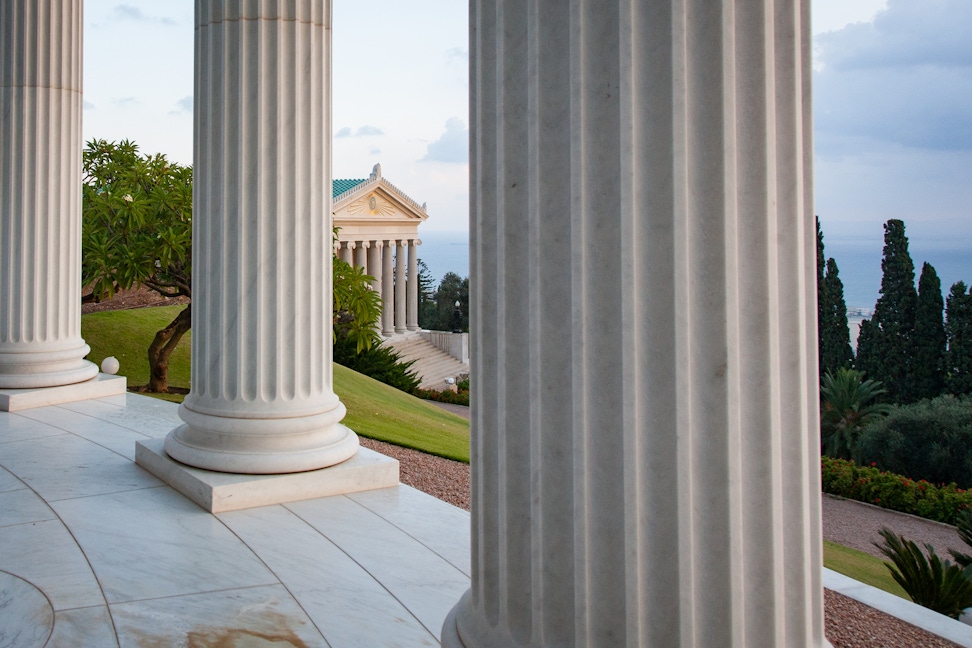
“To get every anchoring system and every part aligned in the sequence of installation — so they could arrive on site in containers in the exact order of execution — took an intense four-day, ten-hour-a-day session in Paris with the Unimarbre team, going through every single column, entablature, cornice, pediment, moulding and coffer. The columns are solid structural marble; so are the cornices; the smallest piece of marble on the building is five centimetres thick, and all of it is curved. I'm a modernist, not a classicist, so the architecture itself was never the thrill — but the building of it was like building a cathedral.”
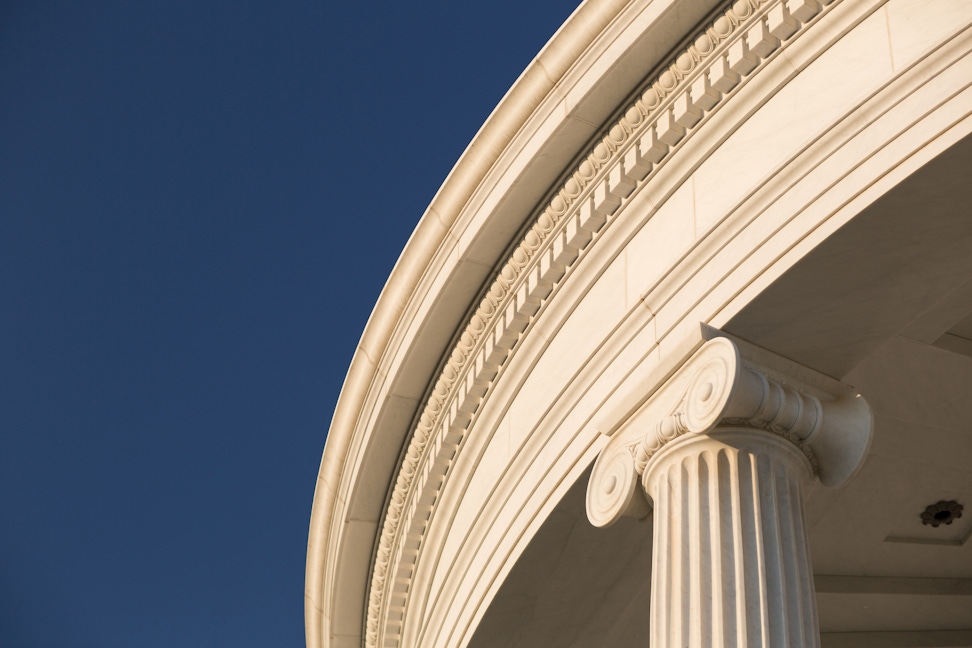
“We used the exact same green ceramic tiles as the Seat of the House of Justice, laid in a radial pattern; the roof alone took about a year.”
“In five years we built roughly 300,000 square feet, with about 150 craftsmen on site at peak. Because the Bahá'í bought so many of the materials themselves, the true cost was hard to know — but between our contracts and what I estimated the materials to be, in 1995 prices it ran something on the order of five to six hundred dollars a square foot, maybe ten times that to execute today, if it were even possible.”
Designed to last centuries, funded by voluntary donations from the worldwide Bahá'í community, and inscribed by UNESCO as a World Heritage Site in 2008 — the Centre functions as an active international hub for scholarship and administration. This working facility houses scholars and administrators engaged in text analysis, translation, and research to develop the global coordination of the Bahá'í Faith. To support this continuous, daily operation across generations, the building's infrastructure sets an extraordinary standard of permanence: while the concrete core is engineered to carry the institution's functional needs far beyond a single lifetime, the exterior marble cladding is systematically designed to be replaceable after centuries of physical wear.
A building mandated to last five hundred years sets the standard for everyone who touches it.
The completed Centre for the Study of the Texts, set into the northern slope of Mount Carmel above Haifa Bay.
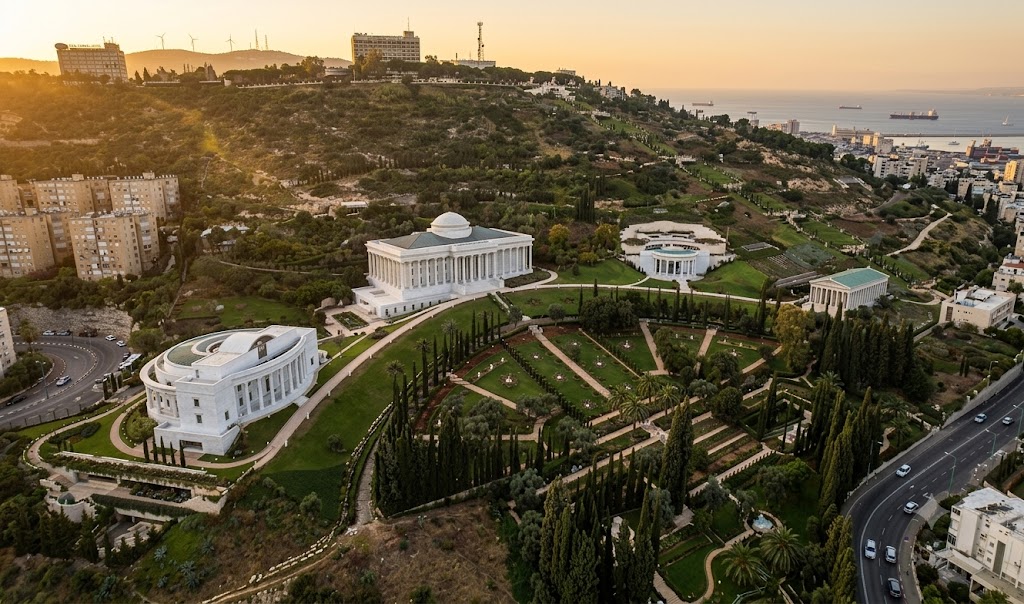
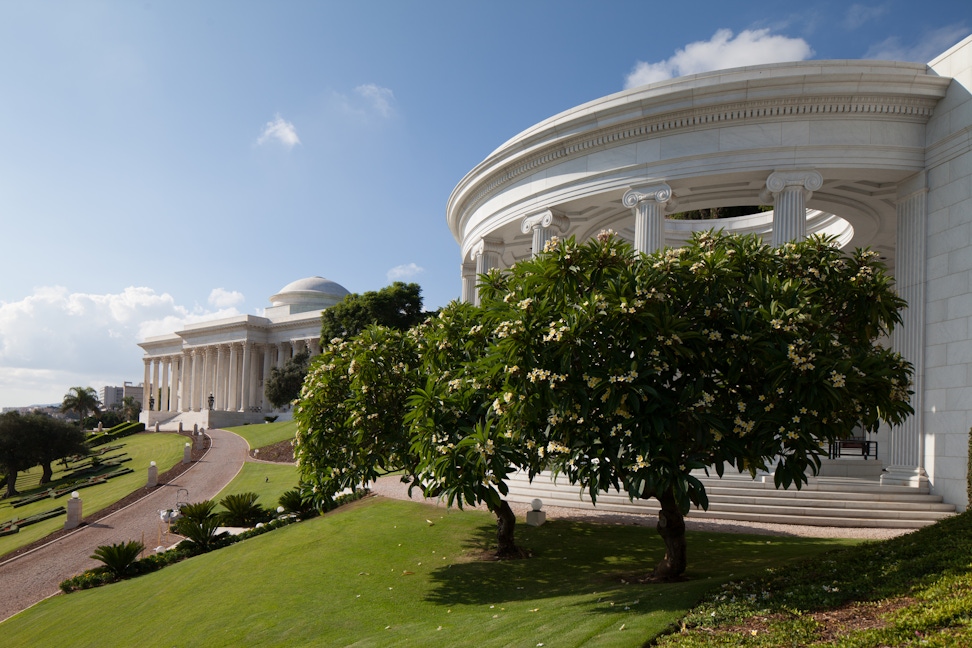
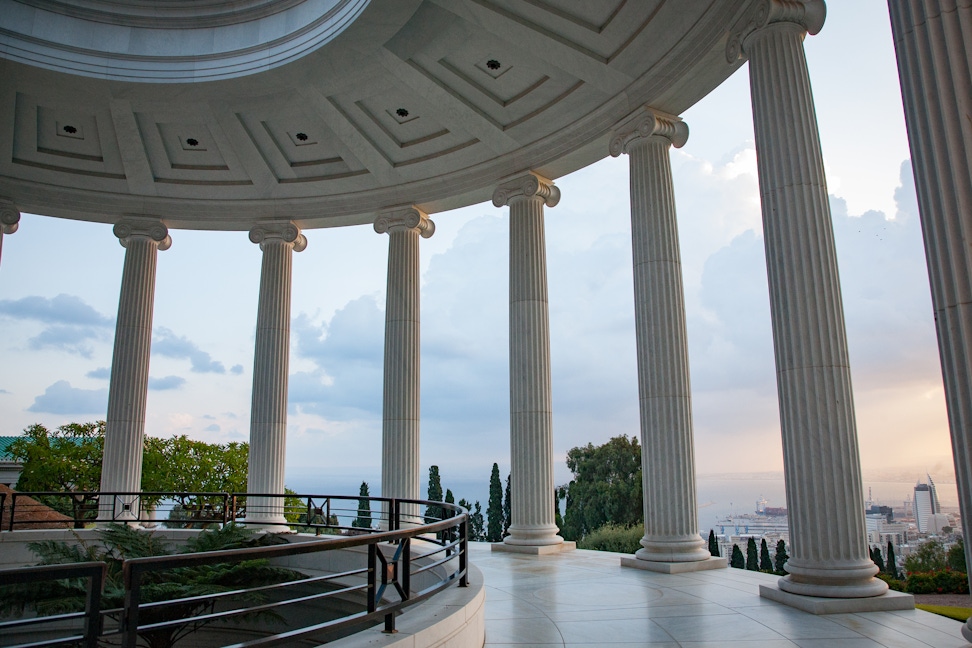
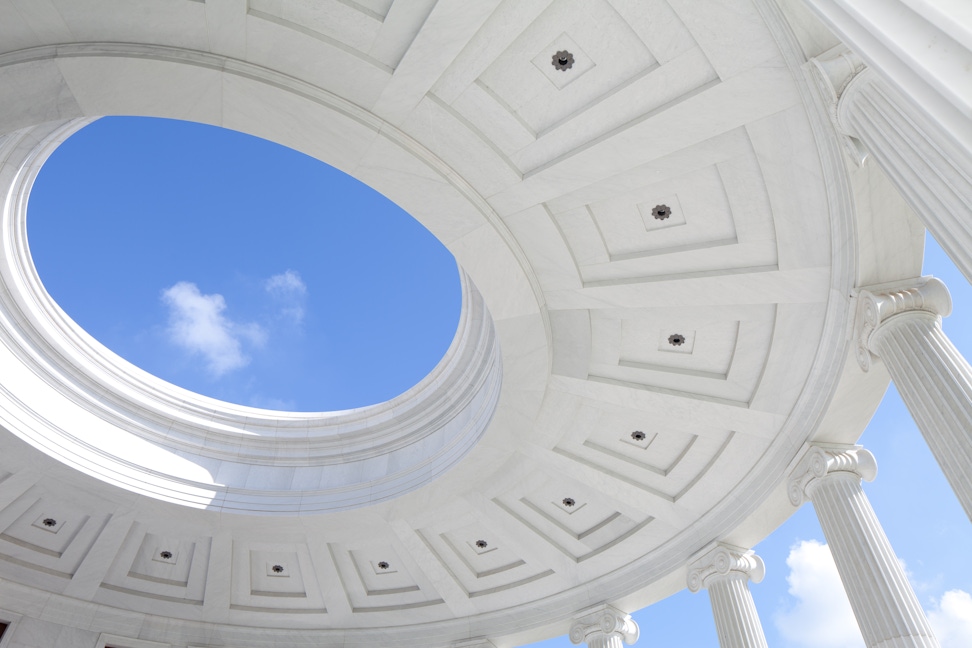
The Centre for the Study of the Texts — Scott's work on Mount Carmel, to the 500-year mandate.
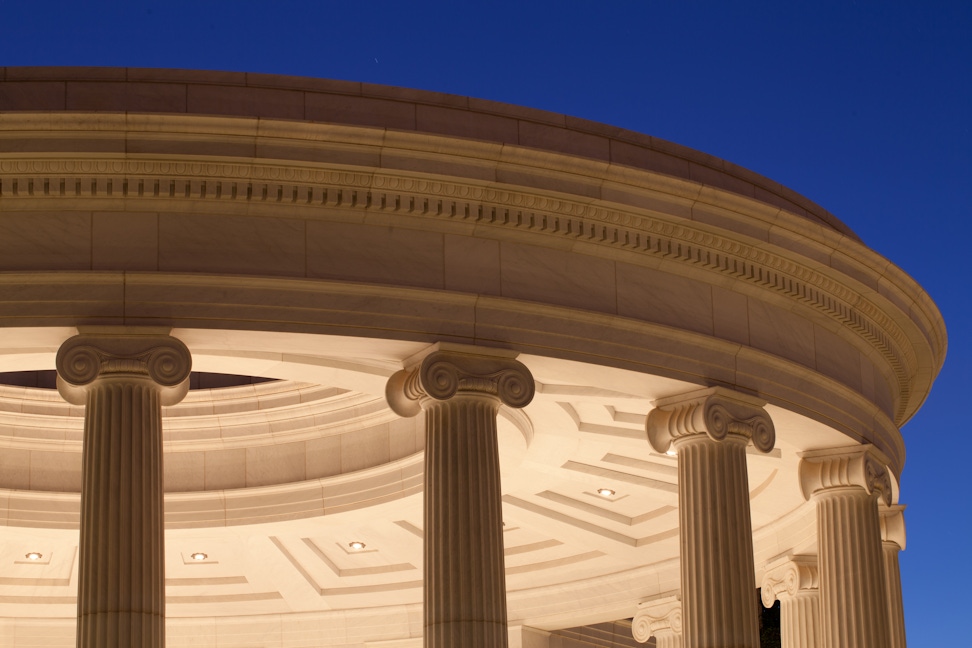
From a 500-year mandate to a monument built into the mountain to outlast its builders.